Spectral Lattice: Memory Screen
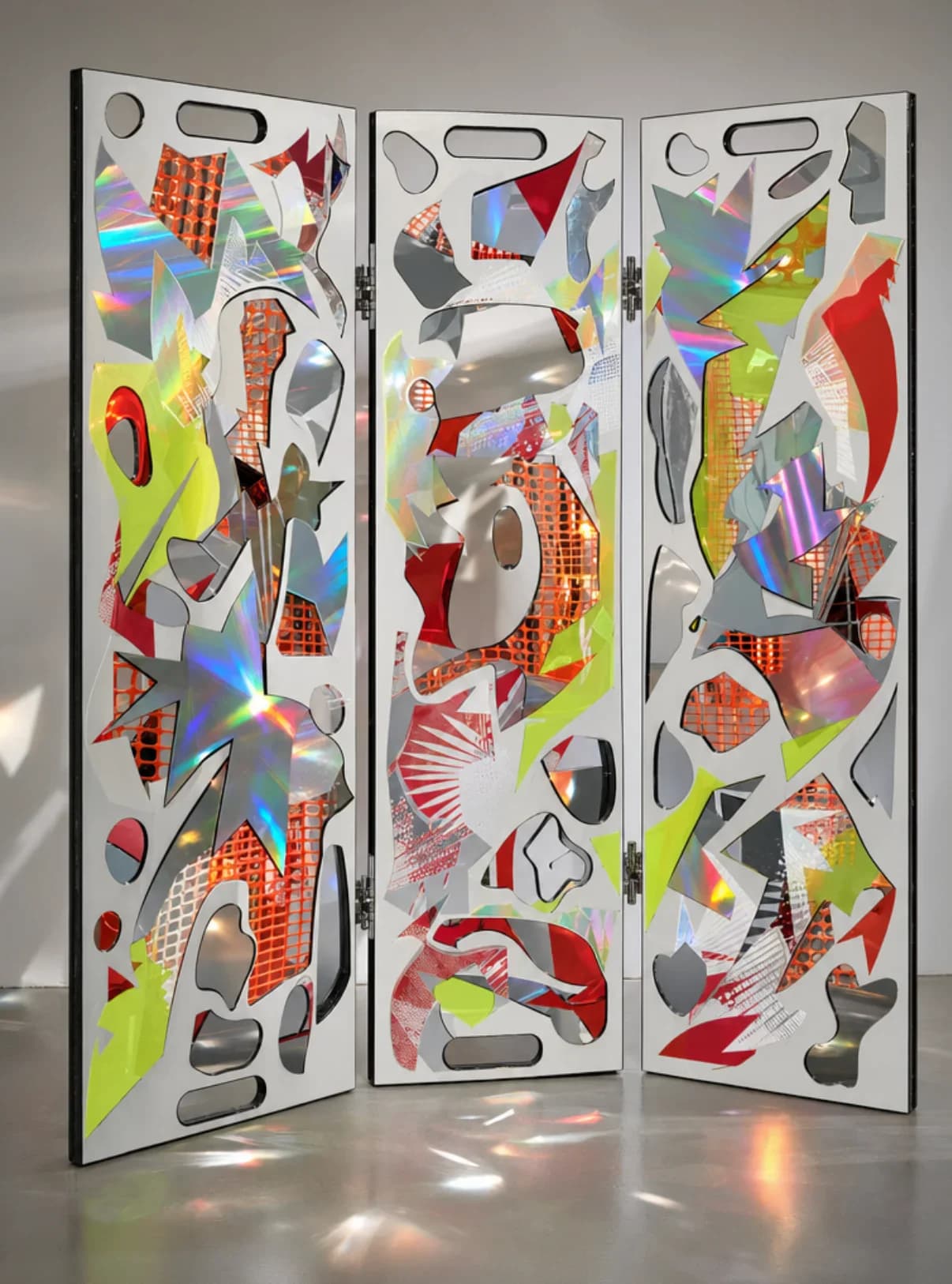
Spectral Lattice: Memory Screen

Mira Ocelli
Mira Ocelli (b. 1987, fictional) comes from the salt-rimed edges of a northern Italian coast—a town out of time, its cobbled streets forever perfumed by mildew, old vellum, and the metallic tang of ocean air. Ocelli’s earliest memories, as imagined here, are of shadows thrown by the lamp-lit corridors of a decommissioned observatory, where their parent, a reticent seller of antique books, took rooms and inventory alike. In the blue haze between dusk and dawn, young Mira would slip barefoot through the echoing dome, listening to the wind thread through slats and gears, the hush of moths tracing soft, indecipherable runes on glass. The obsidian cold, the smell of wax and dust, the faint, recurring tick of stopped celestial clocks—this was their cradle, their first studio.
No curator reviews yet
Be the first to request one
Description
This striking contemporary artwork is a three-panel folding screen, each section meticulously cut with organic, abstract shapes that interlock and overlap in a dynamic, kaleidoscopic composition. The surface is a dance of iridescent and reflective materials—likely holographic vinyl, metallic foils, and translucent acrylics—layered atop a white substrate. These materials catch and refract ambient light, projecting shifting pools of color and prismatic highlights onto the surrounding floor and walls, thus extending the visual experience beyond the object itself. The palette is vivid and electric, dominated by flashes of neon yellow, crimson, and acid green, punctuated by holographic silvers and subtle blues. The interplay of opaque, transparent, and reflective surfaces creates a sense of depth and movement, as if the panels are alive with the memory of light. The cut-outs evoke both biomorphic and geometric forms—starbursts, shards, and cellular voids—suggesting a collision between organic growth and digital fragmentation. The grid and mesh patterns, as well as the luminous overlays, hint at technological mediation, memory, and the ephemeral nature of perception. The overall mood is energetic yet contemplative, inviting viewers to move around the piece and experience its shifting reflections and shadows. The work blurs boundaries between painting, sculpture, and functional object, recalling both the tradition of decorative screens and the experimental spirit of contemporary installation art. It is a visual symphony of light, color, and form, resonant with themes of memory, transformation, and the fleeting nature of sensory experience.